
Vermont's Semiquincentennial
Say what?
Strafford and Vermont will be celebrating the 250th anniversary (i.e., the semiquincentennial) of the Declaration of Independence, as will the other 13 original colonies, in 2026, however, because Vermont’s history diverged from the other 13 colonies when it chose to become an independent republic in 1777, it did not formally adopt the Constitution of the United States of America until 14 years later, in March 1791.
So, while the original 13 states will officially celebrate their 250th anniversary as members of the United States in 2027, Vermont, the 14th state, will not actually celebrate its 250th anniversary, its semiquincentennial, as a state of the United States, until 2040.
Strafford Town Meeting - March 2, 1976
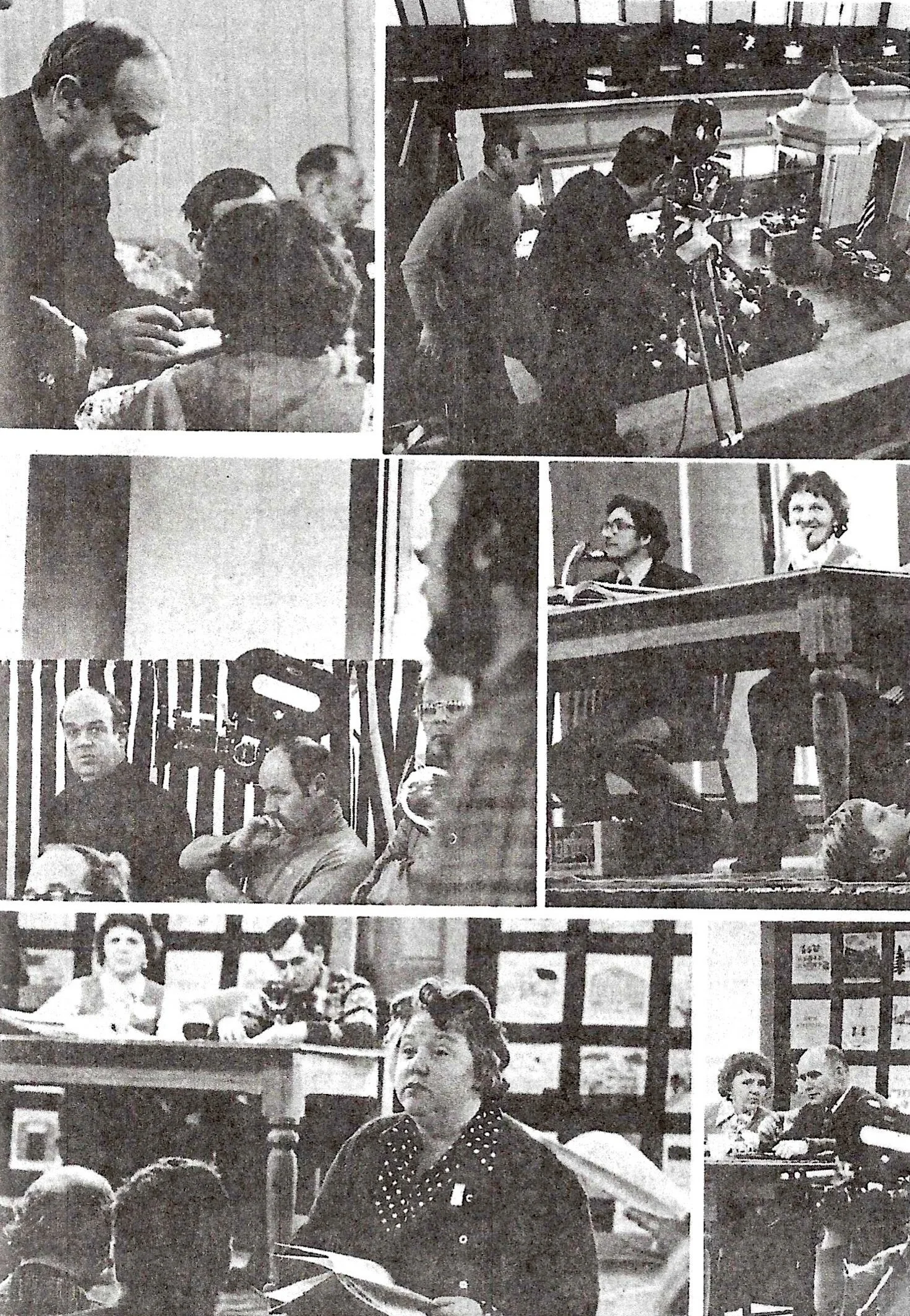
The 1976 Strafford Town Meeting was filmed by Charles Kuralt and the CBS television team. Still photographs by Larry McDonald, Valley News, and Dan Lyons, Agency of Development and Community, State of Vermont.
The explanation of this quirk of history is that at the time of the Revolutionary War Vermont was claimed on the west by the Colony of New York and on the east by the Colony of New Hampshire. In order to pressure the Congress of the United State to guarantee the integrity of Vermont’s borders, Vermont’s colonial leaders, including its first governor Thomas Chittenden and the Allen brothers, Ethan and Ira, went so far as to discuss with Great Britain the possibility of rejoining the British Empire. This got the attention of fledgling United States government and Vermont subsequently became the 14th state of the Union.
It can’t be repeated enough that the constitution of the new Republic of Vermont adopted in Windsor in July 1777, “affirmed universal manhood suffrage and the abolition of slavery—the first guarantee of individual freedom on this continent.” In and of itself a landmark document. What follows is the late Strafford Historian Gwenda Smith’s historical essay as originally printed in the 1977 Strafford Town Report.
Aerial photo of Strafford Upper Village
The July 1974 issue of National Geographic prominently features a cover photograph showcasing Strafford, Vermont. This picturesque image captures the quintessential autumn landscape of rural New England, marked by vibrant fall foliage and the unique architecture of the the Strafford church, known locally as the Strafford Town House.
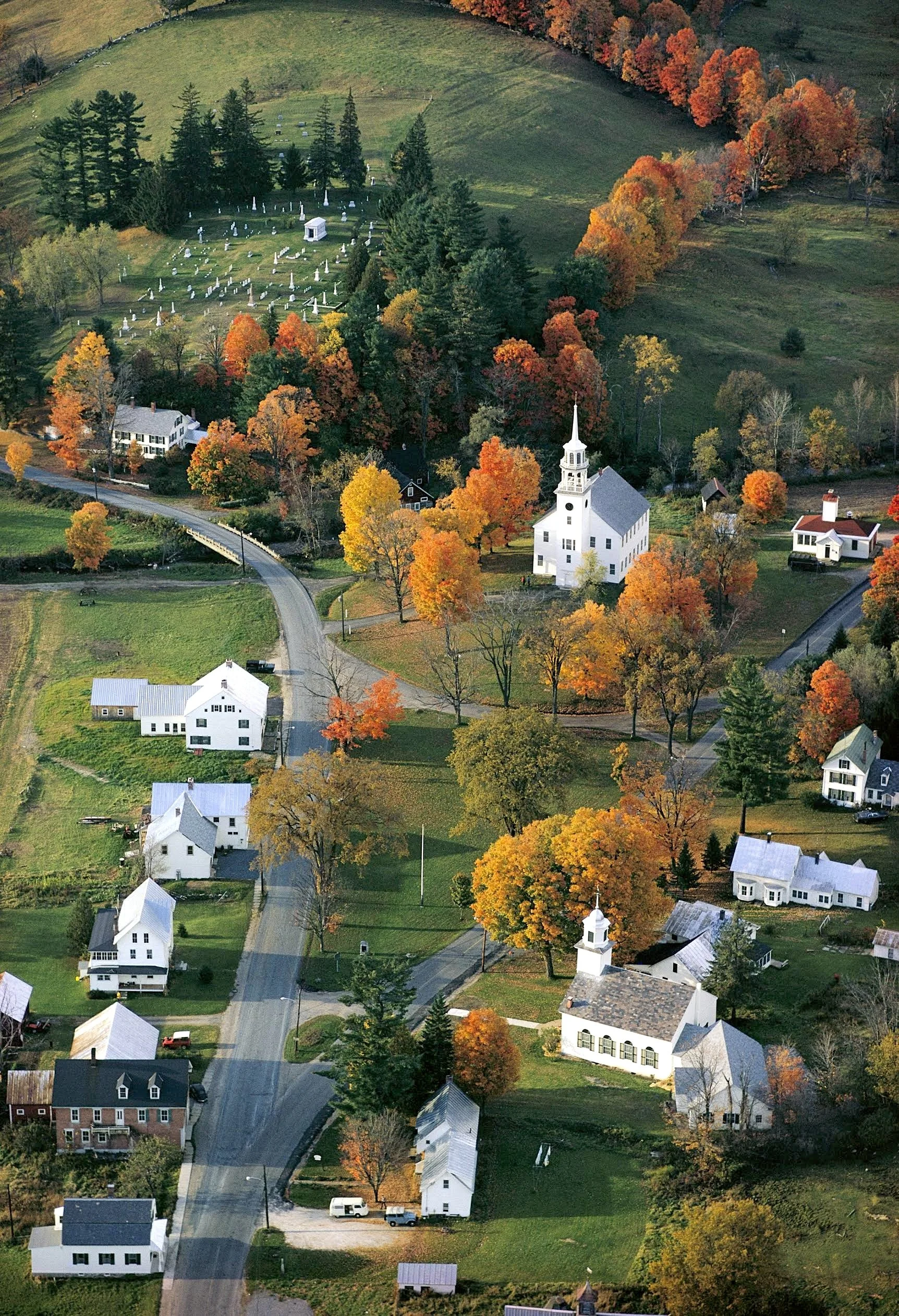
1974 National Geographic cover photo of Strafford Upper Village.
Photo credit – Nathan Benn.
1776 Vermont Bicentennial
1777-1977
For Vermonters this Bicentennial offers an opportunity to reaffirm the principles and values for which our predecessors fought and worked. We have always taken our independence seriously. Years of conflict with New Hampshire and New York over the eastern and western boundaries of Vermont, preceding the struggle for independence from Great Britain, led to the establishment of Vermont as an independent republic in January 1777. The State constitution of the new republic, adopted in Windsor in July 1777 affirmed universal manhood suffrage and the abolition of slavery - the first guarantee of individual freedom on this continent. During Vermont's 14 years of independence, its leaders - Thomas Chittenden, the first governor; Ethan Allen, his brother, Ira, and others, discussed with Great Britain the possibility of Vermont’s rejoining the British Empire, thereby putting pressure on the Congress of the United States to meet Vermont’s demands for guarantees of its borders. Finally in January 1791, Vermont adopted the U. S. Constitution and was admitted to the Union as the 14th state in March 1791. The people of Vermont have always valued their freedom, their land, and the fundamental rights of all. Life in Vermont has always demanded stamina, ingenuity, initiative, and a dedication to independence. In this year of 1977, we dedicate this Town Report to our State's 200th Birthday and to the principles and values on which Vermont was founded.
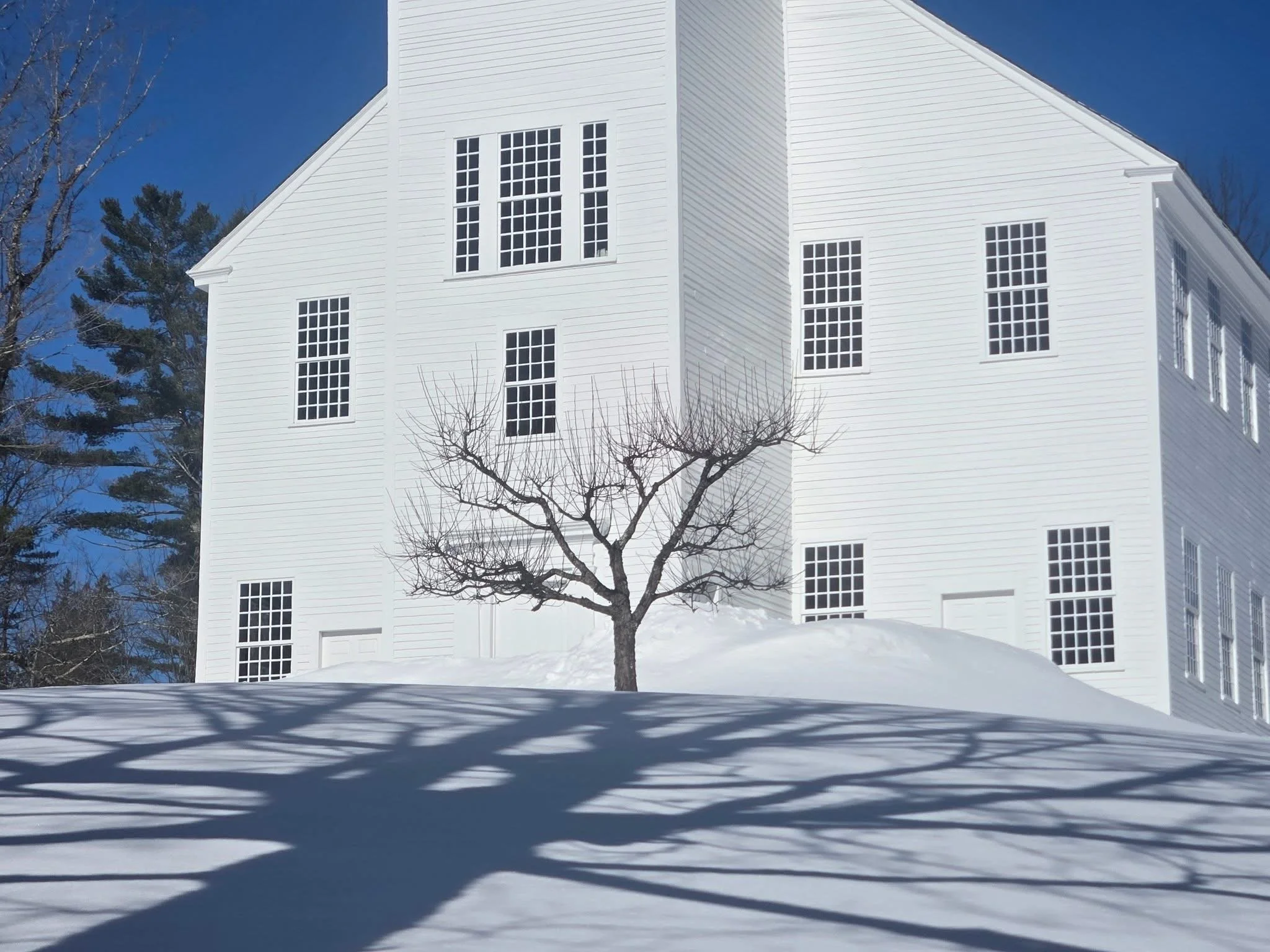
Strafford Town House - February, 2026.
© Micki Colbeck
The Bicentennial Year In Strafford
1976, the Bicentennial year, brought much that was memorable to the Town of Strafford, both the expected and the unexpected. Expected and planned for far in advance was Strafford’s celebration of our nation’s 200th birthday, held over the July 4th weekend. The annual Firemen’s Barbecue on Saturday night was preceded by an especially splendid PTA parade and fair, with many Strafford residents in 18th century costume. Friday night was highlighted by the presentation of a play, Deborah Sampson, the story of a girl who joined the Continental Army, put on by the Strafford Community Students, directed by Winthrop Bean and entirely organized and produced by the young people of Strafford. Following the play was an exhibition by the Ed Larkin Contra dancers, with the audience joining in afterwards.
The Bicentennial Committee, headed by Carrie Judd, coordinated all the weekend activities. A fascinating collection of articles and documents from the early days of the town was assembled in the Parish House of the United Church of Strafford by the Strafford Historical Society. An exhibition of antique Strafford quilts adorned the Town House all too briefly. Sunday afternoon, as the pealing of the town bells ended, 200 years to the minute after the ringing of the Liberty Bell that proclaimed the nation’s independence, Strafford solemnly commemorated the Bicentennial at a ceremony in the Town House. The colors were presented by the Boy Scouts. Selections from the Declaration of independence were read by Mitchell Brown, Jennifer Campbell, Rosalie Coburn, and Gary Kendall, representing old Strafford families. Peter Smith, as master of ceremonies, was our emissary from the mother country, introducing Strafford singers in Songs from America’s Heritage. Dr. Mary Hatch Marshall, whose roots go back to Strafford’s beginnings, was the Bicentennial speaker, presenting the philosophy, feelings, and convictions that gave birth to the Declaration of Independence.
n addition to the Bicentennial, 1976 was a special and exciting year for the Town of Strafford. Our town and its citizens became national celebrities. In previous years Strafford had been prominently featured in the National Geographic magazine and at Disney World in Florida. In 1976 Strafford scenes appeared again in a National Geographic article by Dewitt Jones, who also featured Strafford and Strafford residents in his film documentary, “The New England of Robert Frost.”
On Town Meeting Day, March 2, 1976, Charles Kuralt of CBS television brought his On The Road crew to Strafford to film our Town Meeting. Throughout the day the television cameras recorded the proceedings, motions, discussions, voting, lunch, and the stoking of the wood stoves, all without disturbing the orderly progress of Town Meeting. The film was shown on CBS, nationwide, on the Friday following Town Meeting, and repeated during the summer and on December 24, 1976 on a year-end special telecast of On The Road. CBS and Charles Kuralt did an excellent job of presenting Strafford and truly representative town government. Strafford’s second starring role on the national-and-international stage, came with the 1976 Summer Olympics in Montreal. Three Stafford residents, Beth Perkins, Denny Emerson, and Tad Coffin, had been training with the U. S. Equestrian Team. Due to the frailties that horses are heir to, only Tad rode for the United States in the actual Olympic Three Day Equestrian competition. He won the gold medal - the first gold medal ever for the United States in this event. August 2 the Town of Strafford staged an impromptu welcome home celebration for its first Olympic gold medal winner. A parade, led by Tad Coffin, Beth Perkins, Denny Emerson, Michael Plumb, the visiting silver medal winner in the Three Day Equestrian event, and Martha Rockwell, Strafford‘s Olympic cross-country skier, also featured bands from South Royalton and Sharon and Strafford’s own kazoo band. Bally Cor, Tad Coffin’s horse, couldn’t come but was represented by a miniature rocking horse atop Rose Walke’s garden tractor. National television missed this momentous celebration but people came from all over the Upper Valley and more distant points. For the people of Strafford, who over the years have given so generously of their time and contributions to support the sports programs in the town, and for the young citizens of Strafford who participate in these programs, there is inspiration and pride in the accomplishments of their neighbors.
E. Gwenda Smith
1977 Town Report
This story was adapted from two White River Herald articles by John Freitag.